Narrow Ridge: An Alternative Spring Break Experience

In March of 2015, a group of four from Georgia College participated in the Narrow Ridge Earth Literacy Center Alternative Spring Break program. While there, they were joined by students from the University of Tennessee and the University of Connecticut. Due to their positive feedback, Chief Sustainability Officer Lori Strawder, student Ashlie Adamson, and I returned this year to experience sustainable living practices in action firsthand. We left campus on March 19 and returned on March 24, having gained new insights and partnerships in sustainability practices.

Situated on 500 acres in Washburn, Tennessee, the Narrow Ridge Earth Literacy Center is a non-profit organization which was established in 1991 “to study, teach and demonstrate sustainability with solar powered rental facilities and homes” and which is “dedicated to providing experiential learning of Earth Literacy based on the cornerstones of spirituality, sustainability and community.” Although Narrow Ridge has a community of welcoming individuals from various backgrounds, its programs are led by founder and on-site volunteer Bill Nickle (Fig. 1), director Mitzi Wood-Von Mizener, and co-operations managers Jason Von Mizener and Martha Pierce.
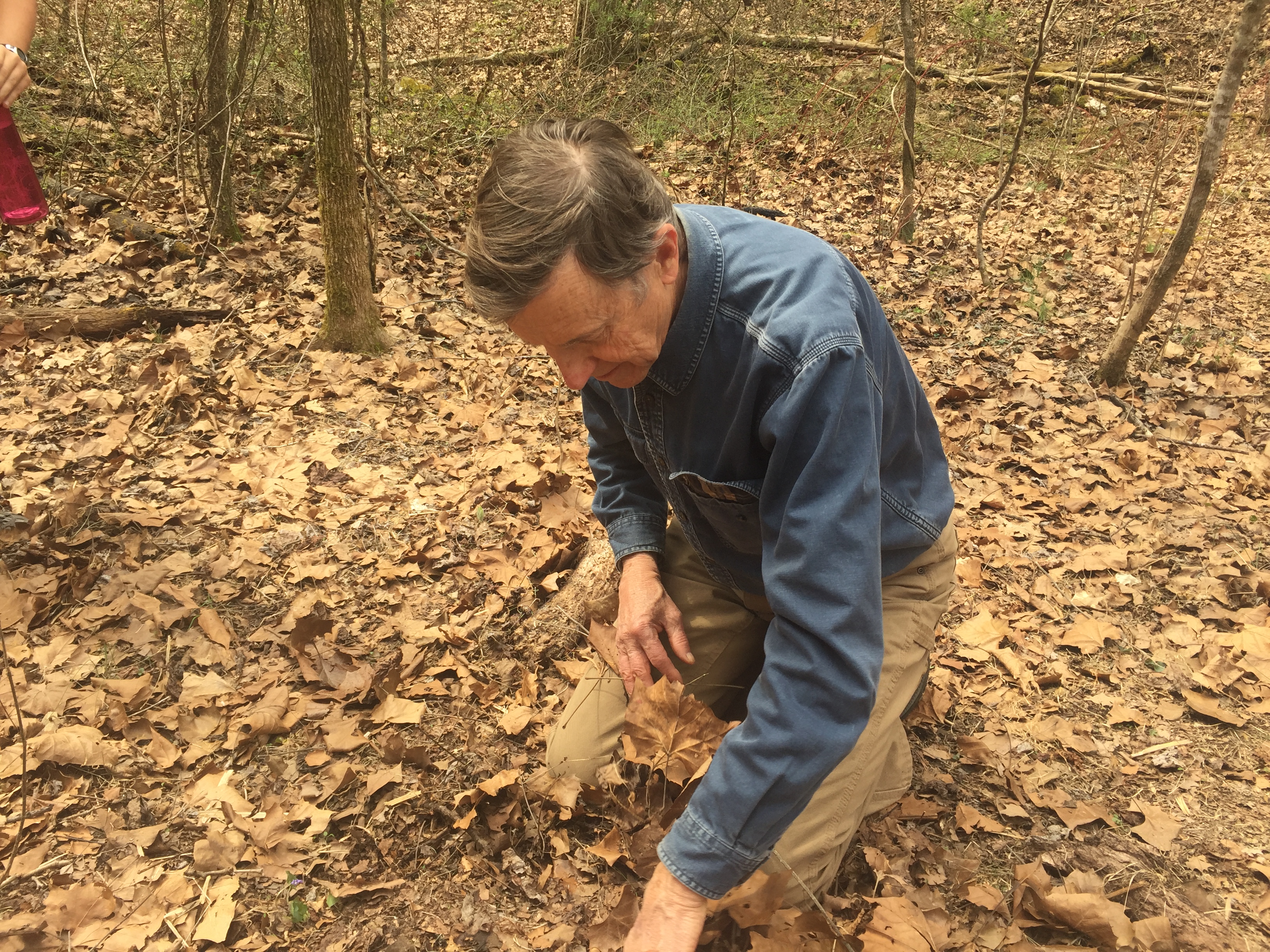
Fig. 1. Founder Bill Nickle explaining natural history in the 120-acre wilderness area of Narrow Ridge.

The Alternative Spring Break is one of many programs, such as music gatherings, vision fasts, film nights, and seasonal celebrations, offered by Narrow Ridge. However, during Alternative Spring Break, students are provided a week-long opportunity to “take advantage of the opportunities for retreat, restoration and recreation offered by [the] beautiful natural setting while also delving into environmental issues and engaging in service learning projects such as organic gardening, conservation projects and eco-construction projects.” Students open to bypassing more traditional spring break activities are treated to exquisite vegetarian meals, comfortable lodging (Fig. 2), tours of community members’ homes, and immersion in a serene natural setting. They return home with greater awareness of sustainability and environmental concepts. Narrow Ridge, in turn, benefits from the on-site projects completed by students and by the new friendships formed. Indeed, Mr. Nickle explained to us that he expected to learn from us as much as we learned from him during our week together.
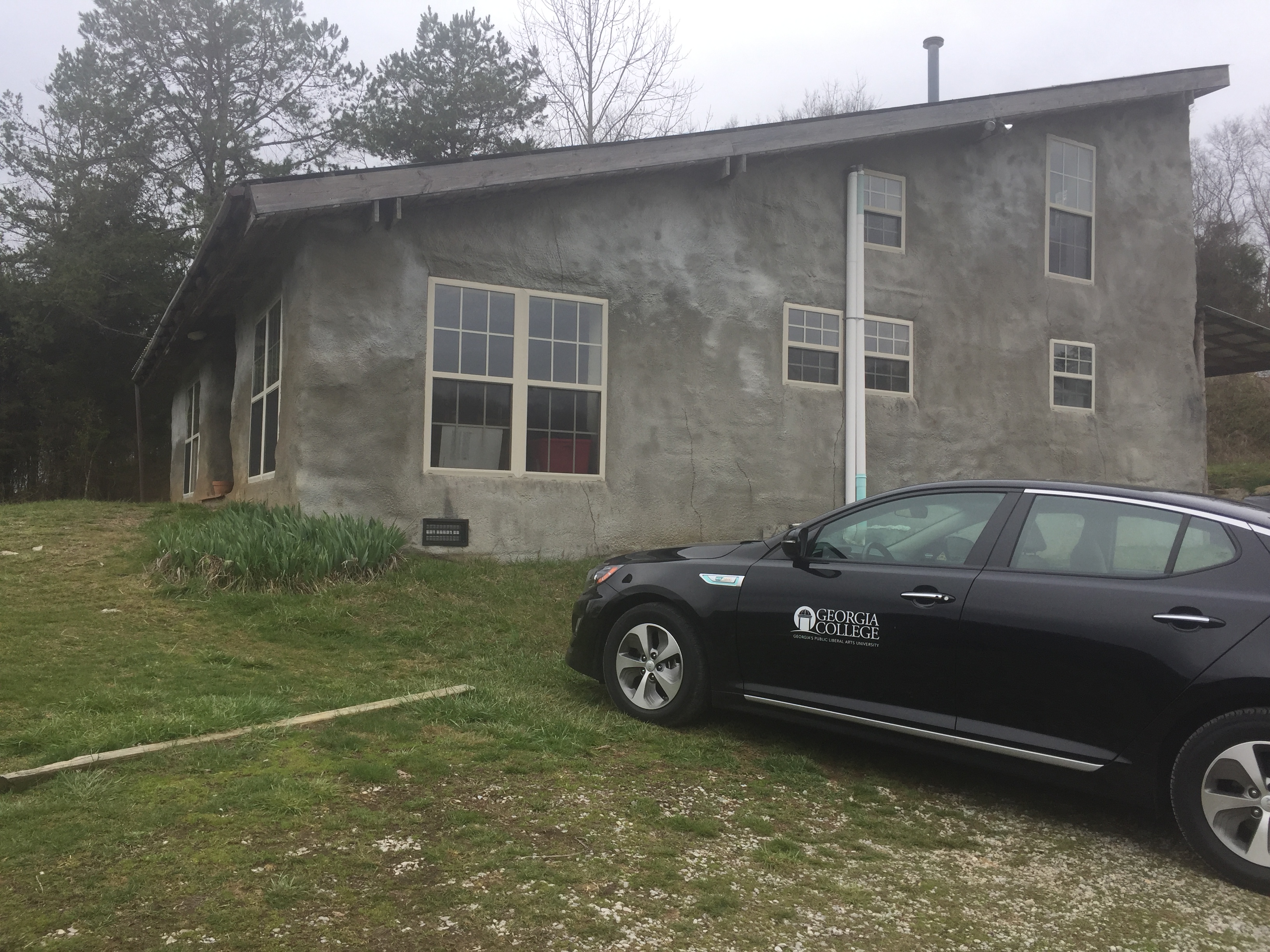
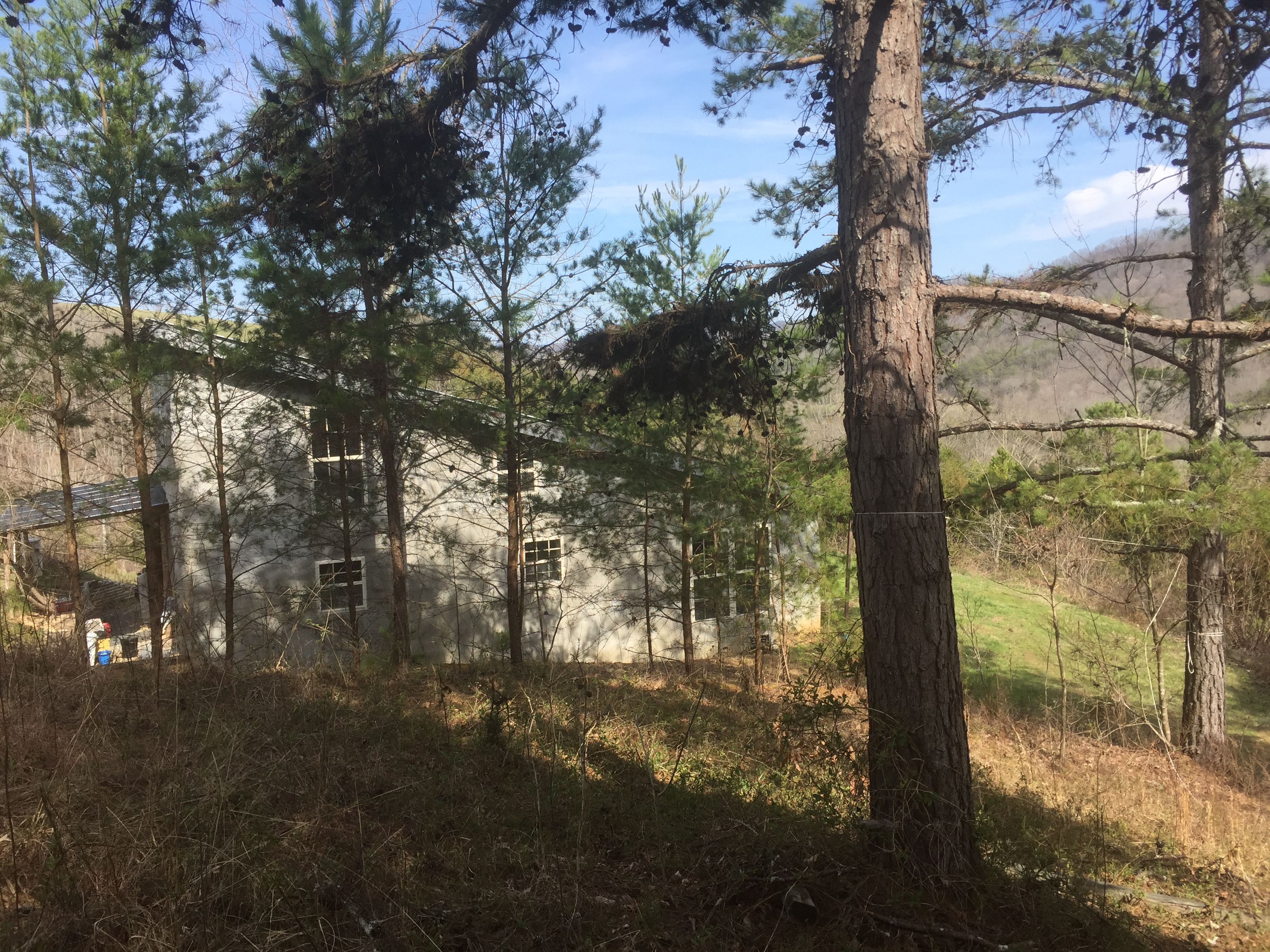


Fig. 2. The Strawbale Lodge, where we stayed during our week at Narrow Ridge.

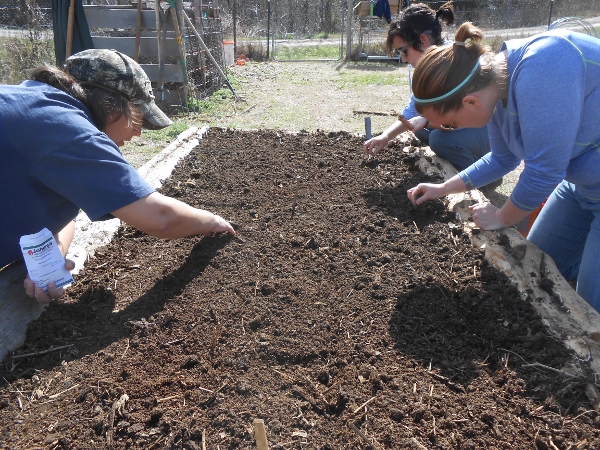
Being a group of three, and not joined by other college groups, we were unique in being the smallest group Narrow Ridge has hosted for Alternative Spring Break to date. While our small size allowed us greater flexibility in our schedule, our experience was no less valuable, with the staff and residents ensuring that our week was filled with opportunities for tours and learning. During the week, we heard the history of Narrow Ridge and their permaculture practices, witnessed various sustainable design practices in the facilities, visited their natural burial preserve and wildflower memorial garden, walked through their labyrinth, consumed edible plants, learned about the succession and natural history of land set aside as wilderness by Narrow Ridge (Fig.1 & Fig. 3), participated in a community Spring equinox celebration, and built two garden beds (Fig. 4), among so many other wonderful activities.
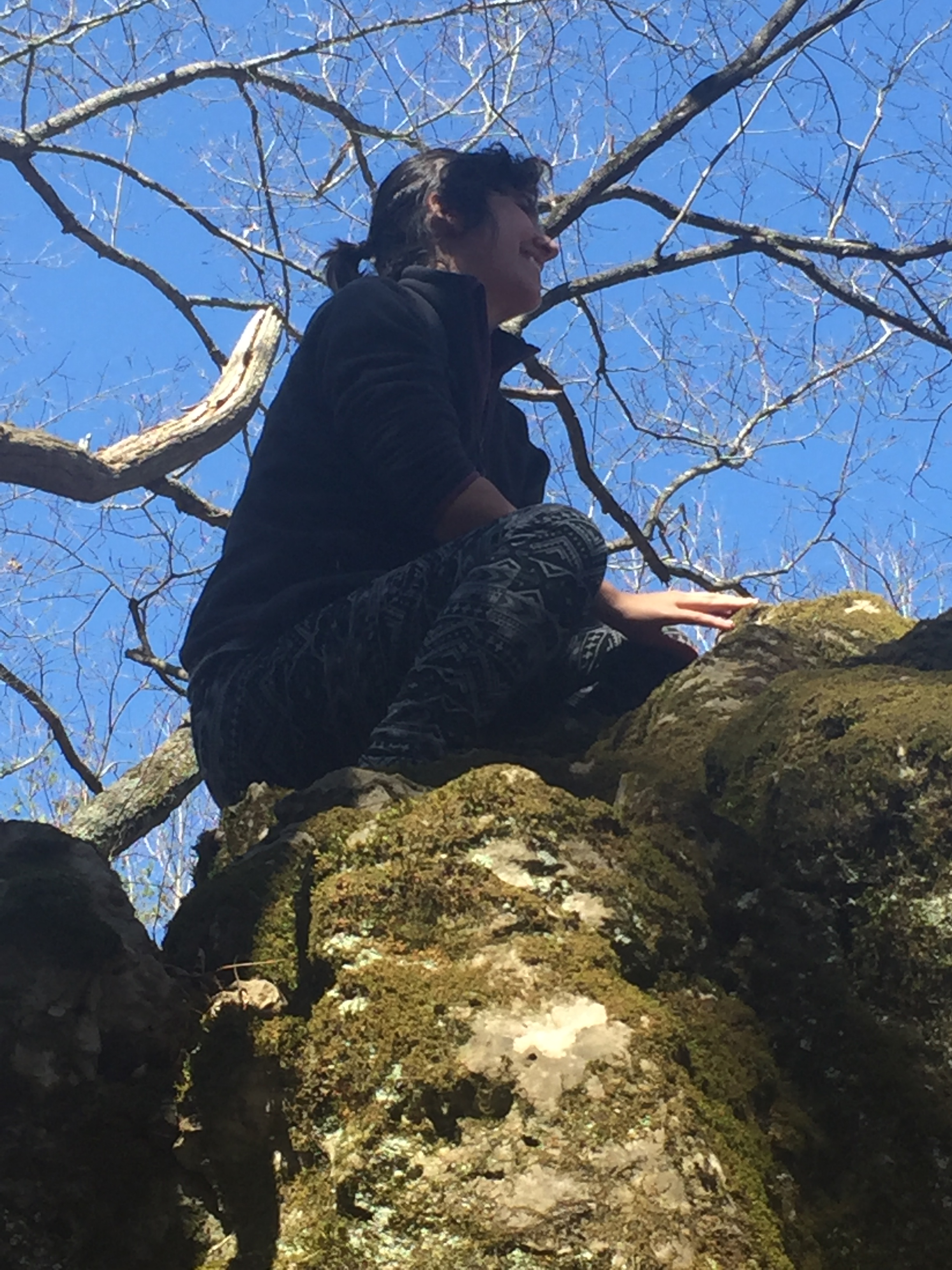
Fig. 3. During our hike, student Ashlie Adamson enjoying a quick climb up a rock formation, called the sacred stones by Narrow Ridge community members.

By immersing ourselves in the natural and built environment at Narrow Ridge, the ease with which people can adopt sustainable living practices became clear. As student Ashlie Adamson (Fig. 3) explains, “The biggest thing that I took away from it all is that people who are utilizing things like composting toilets, passive solar technology, solar panels, etc. are not extreme or radical people. Everyone we met…simply had a lot of concern for the state of the environment and the world that we live in. Living a sustainable lifestyle is not as hard as some might think.” She also put together a short video showcasing the trip.

Having now completed two wildly successful and trans-formative trips to Narrow Ridge, we in the Office of Sustainability hope to continue to offer this as an Alternative Spring Break option for our students in the future. Lori Strawder has been the primary champion, organizing these trips and ensuring their success. Regarding the appeal of Narrow Ridge, she explains, “The Narrow Ridge Earth Literacy Center offers visitors a sense of what a true community should be. For GC students, I feel it is important to give them this glimpse of how life could be. Living and learning to live off-the-grid and sustainably is only part of the journey. Students get to experience how a community can work together to support each other, networking, sharing ideas as well as ways in which to work with nature and take advantage of the resources it has available. To clarify, that is taking advantage of the natural resources in a responsible way. Students learn that taking care of the environment is just as, if not, more important than, taking care of your neighbor. Additionally, Narrow Ridge is designed to be all inclusive, all races, nationalities, color, gender, religion. As long as members of the community are committed to being sustainability-minded and environmental stewards, all are welcome! This is an exemplary example of community and I am grateful to have had and welcome more opportunities to share this experience with more GC students!” If you are interested, or know someone who may be, please email us at sustaingc@gcsu.edu. We would love to tell you more about this opportunity and add you to next year’s attendance list.
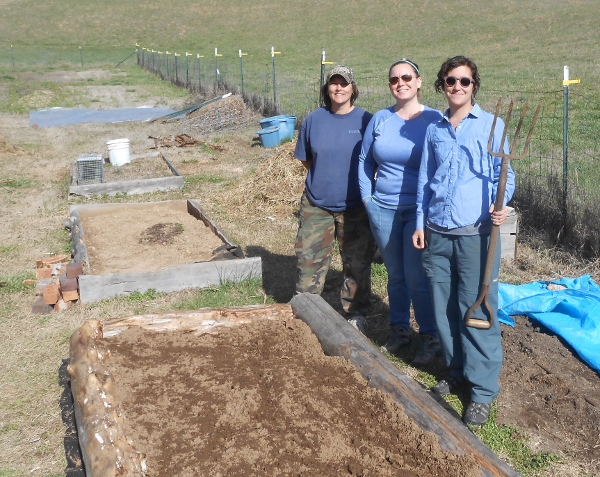
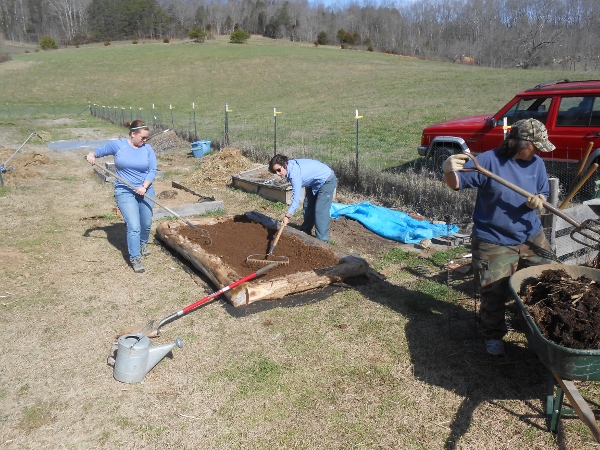
Fig. 4. During our stay, we built a new garden bed for the Narrow Ridge community garden.

Certificate in Sustainability at Georgia College

On March 21st, 2017, the Board of Regents for the University System of Georgia approved the Certificate in Sustainability at Georgia College.  This interdisciplinary certificate will be managed in the Department of Philosophy and Liberal Studies, in the College of Arts and Sciences, but it includes course offerings from three of the university’s colleges.  The program must be combined with an existing degree from across the institution.

Justification for Sustainability Certificate.

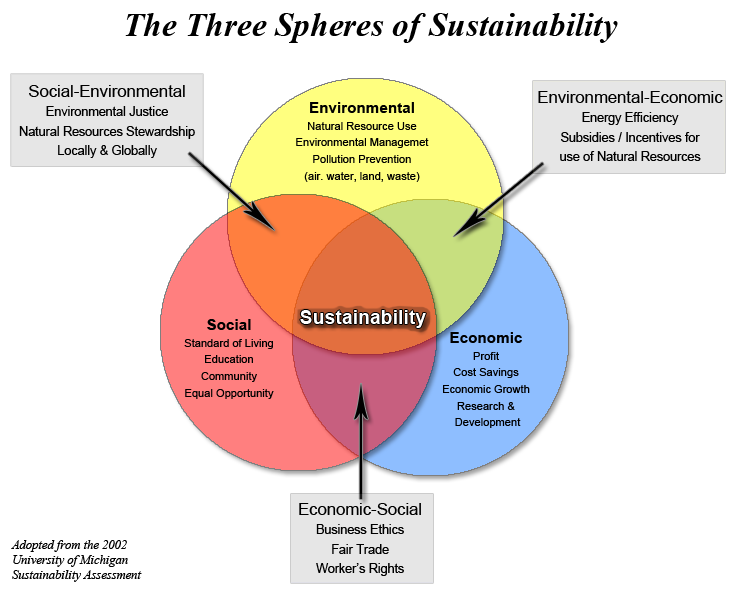
sustainability_spheres

The motivation for the certificate is to provide a pathway for undergraduate students to achieve competence in the three E’s of sustainability: Ecology, Economics, and Ethics.  After taking an introductory class in sustainability as a sophomore, the students will complete three core-level classes and three advanced courses, spread out among many departmental selections.  To complete the certificate, each student will demonstrate their capabilities through a senior capstone class in interdisciplinary studies, or some related field, to be mentored by a faculty member trained in sustainability.

This certificate would support the goals of the GC Sustainability Council to “encourage the attitudes, choices and habits that support sustainability at the institutional and personal level in the Georgia College community and connect civic responsibility to learning experiences, both inside and outside the classroom through community service, education and outreach.”

Requirements for Completion.

The initial offering of IDST 2050: Sustainability is scheduled for Spring semester 2018.  The certificate is designed for students interested in pursuing graduate students or careers in the many fields of sustainability.  For more information, please contact the Department of Philosophy and Liberal Studies, 325 Terrell Hall, (478) 445-5221.

RecycleMania: One Month In

RecycleMania is in full swing. You may be asking yourself, what have we been up to?

We tracked our recycling! For Georgia College, based on our initial assumptions, the average cumulative recycling rate is 7.5%. Our weekly recycling rates have ranged from between 6.9 and 8.3%! You can also see what our recycling means in terms of the amount of CO2 equivalent that was saved, and energy to power cars and households on our scoreboard. To calculate this recycling rate, we estimate how full our campus dumpsters are on a daily basis. Half of these dumpsters (three trash bins and two recycling bins) are at the depot, where much of our campus trash and recycling is taken. We record these estimates in a spreadsheet, and each week use the total waste that has gone through the bins to estimate the weight. These estimates will be verified and updated at the end of RecycleMania when we take into account the real weights from our trash and recycling bills.

We recycled at Zeta Mother Daughter Day! On R25, you can now request to have recycling at any event on campus. The sorority Zeta Tau Alpha took advantage of this and recycled their gallon-size beverage containers at the event. The Office of Sustainability was there to set up and take down recycling bins.

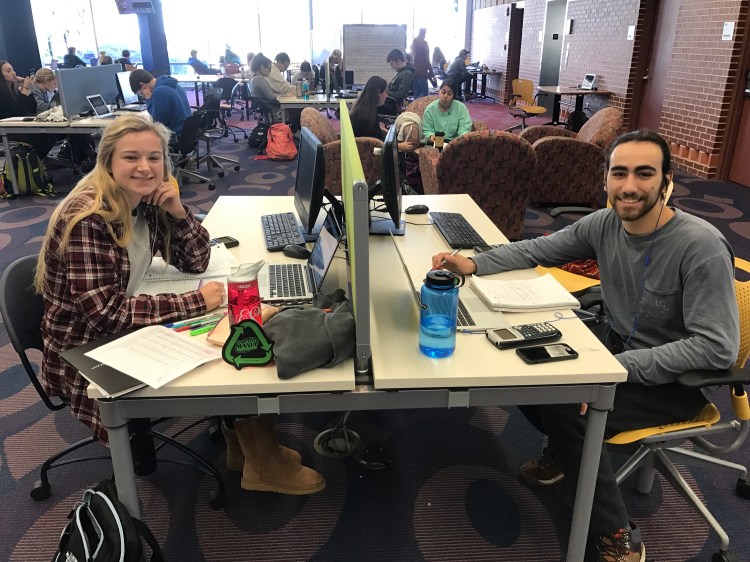
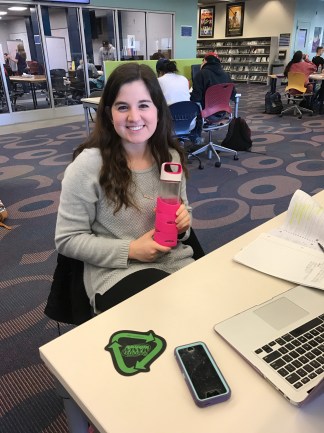
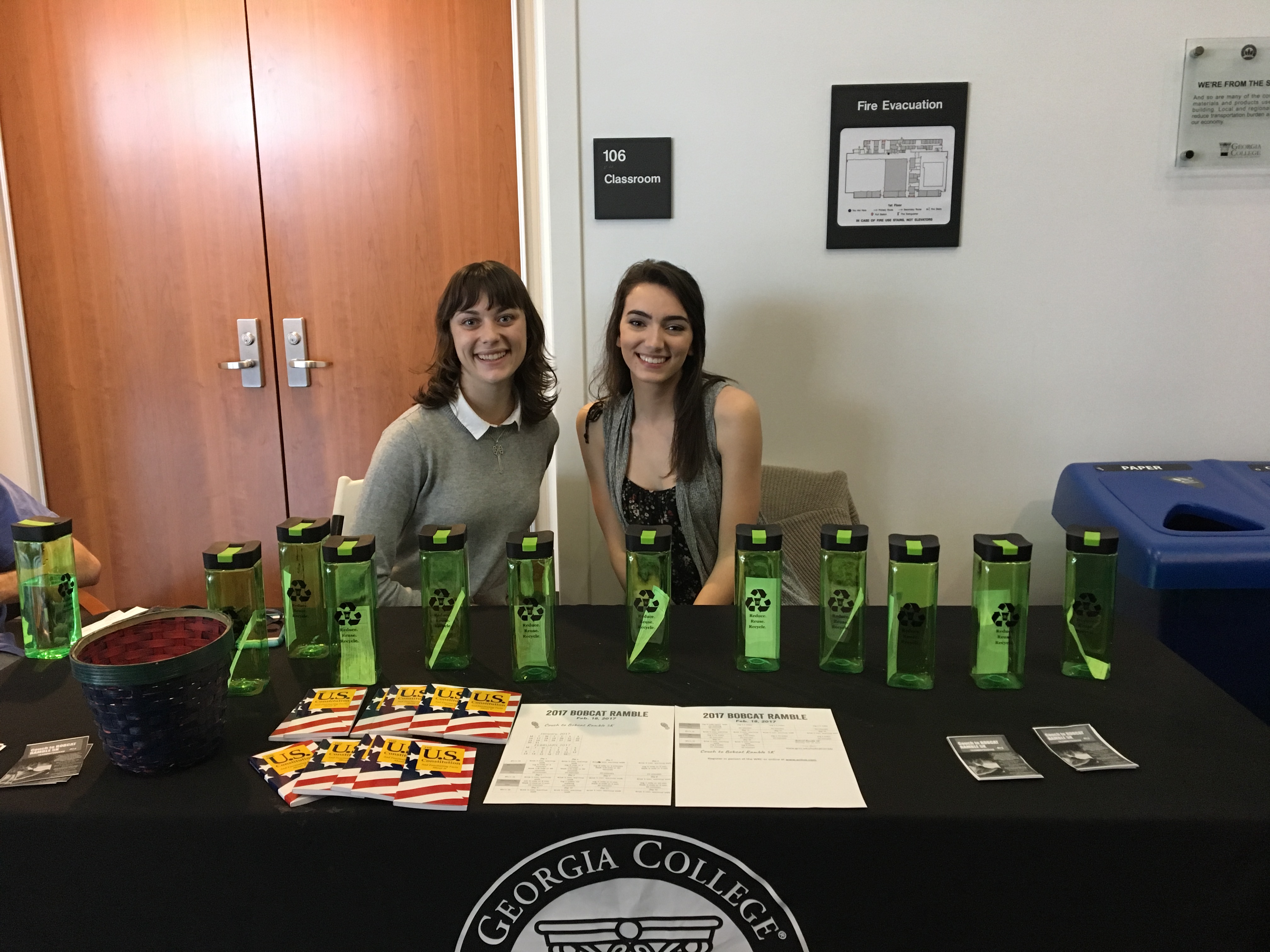
We caught students green handed! Caught green handed is an initiative to reward students, faculty, and staff for participating in sustainable practices. We “caught” people using reusable water bottles, thermoses, riding bikes, and reusable grocery bags. Our prize is a jar opener, which is made out of recycled tires and which can double as a coaster, frisbee, fan, or whatever you want it to be.

Lauren and Joey

Lauren and Joey were caught green handed today! Reusable water bottles are a great way to stay hydrated and promote sustainability!

Meg        Rebecca

Meg and Rebeca sure know how to work hard and stay green with their reusable water bottles!

Check back with us and the RecycleMania Scoreboard to see how Georgia College ranks at the end of the competition!

Bobcats Work Green

Sustainable development was defined by the Brundtland Report in 1987 as “development that meets the needs of the present without compromising the ability of future generations to meet their own needs.” A commonly accepted definition of sustainability – “the ability to meet the needs of the present without comprising the ability of future generations to meet their needs” – was developed from this. Many sustainability practitioners use the triple bottom line framework (people, planet, profit) to plan and measure their sustainability initiatives. As indicated by these broad definitions, sustainability is a large practice area requiring input from a wide variety of stakeholders. This is particularly true on a college campus, like Georgia College (GC), where many projects, including recycling, composting, and gardening, must be coordinated.

In order to engage more stakeholders at GC, the Office of Sustainable has designed a new program called Bobcats Work Green. This is a partnership program which all GC departments and offices can enter into voluntarily. The goals of the program are to foster a culture of sustainability on the GC campus; teach students, faculty, and staff about sustainability best practices; and create stakeholders who will continually spread sound sustainability practices throughout campus. By joining this program, Bobcats Work Green partners will be empowered to implement useful sustainability tips into their daily routine and assist the broader sustainability initiatives on campus. All interested GC groups can become a partner by completing the following steps:

  1. Contact the Office of Sustainability (sustaingc@gcsu.edu) to indicate your interest in becoming a partner.
  2. Designate a Green Bobcat Liaison, a member of the office to be the point person for all sustainability efforts.
  3. Schedule an initial walk through with Office of Sustainability representatives to showcase your office workflow and needs.
  4. Attend a presentation by the Office of Sustainability designed to educate the office members about sustainability (both in general and on campus) as well as sound sustainability practices to be implemented into their daily routines.
  5. Sign the GC sustainability pledge.
  6. Implement the sustainability action items contained within the Bobcats Work Green guidance document.
  7. Advertise and publicize your participation in the program.

Georgia College has proven to be a sustainability leader among its peers. The Green Initiative and Sustainability Council were established in 2009, showing a commitment to environmental stewardship. Since that time, GC has engaged and/or implemented multiple other sustainability-related stakeholders and projects, including the Office of Sustainability, the West Campus Garden, a composting operation, LED light conversions, LEED certification for two buildings, and installation of low-flow fixtures, among many others. For these efforts to succeed and grow, sustainability must be embedded into the culture of our campus, with ever more stakeholders becoming engaged and participating; and the Bobcats Work Green program is one more tool to help these efforts succeed.

Georgia College Is a Tree Campus USA

On February 14, 2017, I attended the second annual Mayors’ Symposium and Statewide Arbor Day Celebration with my colleague Susan Daniels. This celebration was hosted by Trees Atlanta, the Georgia Urban Forest Council, and the Georgia Forestry Commission at the Trees Atlanta Kendeda Center. This year’s event was titled “Colleges, Corporations, and Cities: Building Campus Sustainability.” Project managers, city officials, landscape architects, and sustainability directors were brought together to speak about the integration of urban forests into city and campus design. In their discussions, they touched on themes of inter-agency cooperation, the health benefits of nature, and loving our tree canopy. Between the presentations, the director of the Georgia Forestry Commission, Robert Farris, recognized new and renewing Tree City USA communities, Tree Line USA utility companies, and Tree Campus USA colleges.

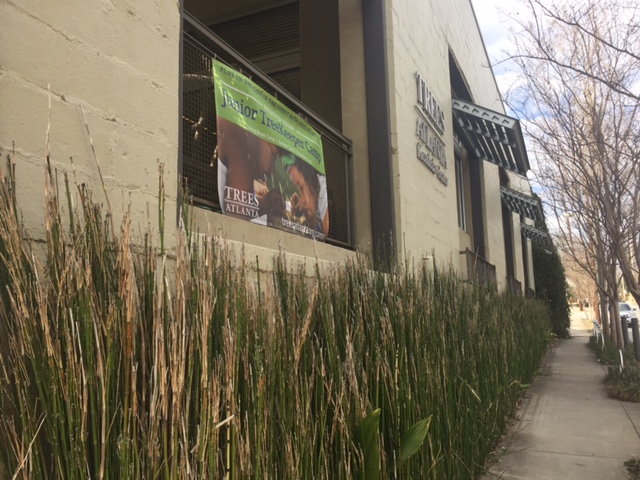
mayors-symposium_2-14-17_10Fig. 1. Looking Down the Landscape Along the Wall of the Trees Atlanta Kendeda Center, February 14, 2017.

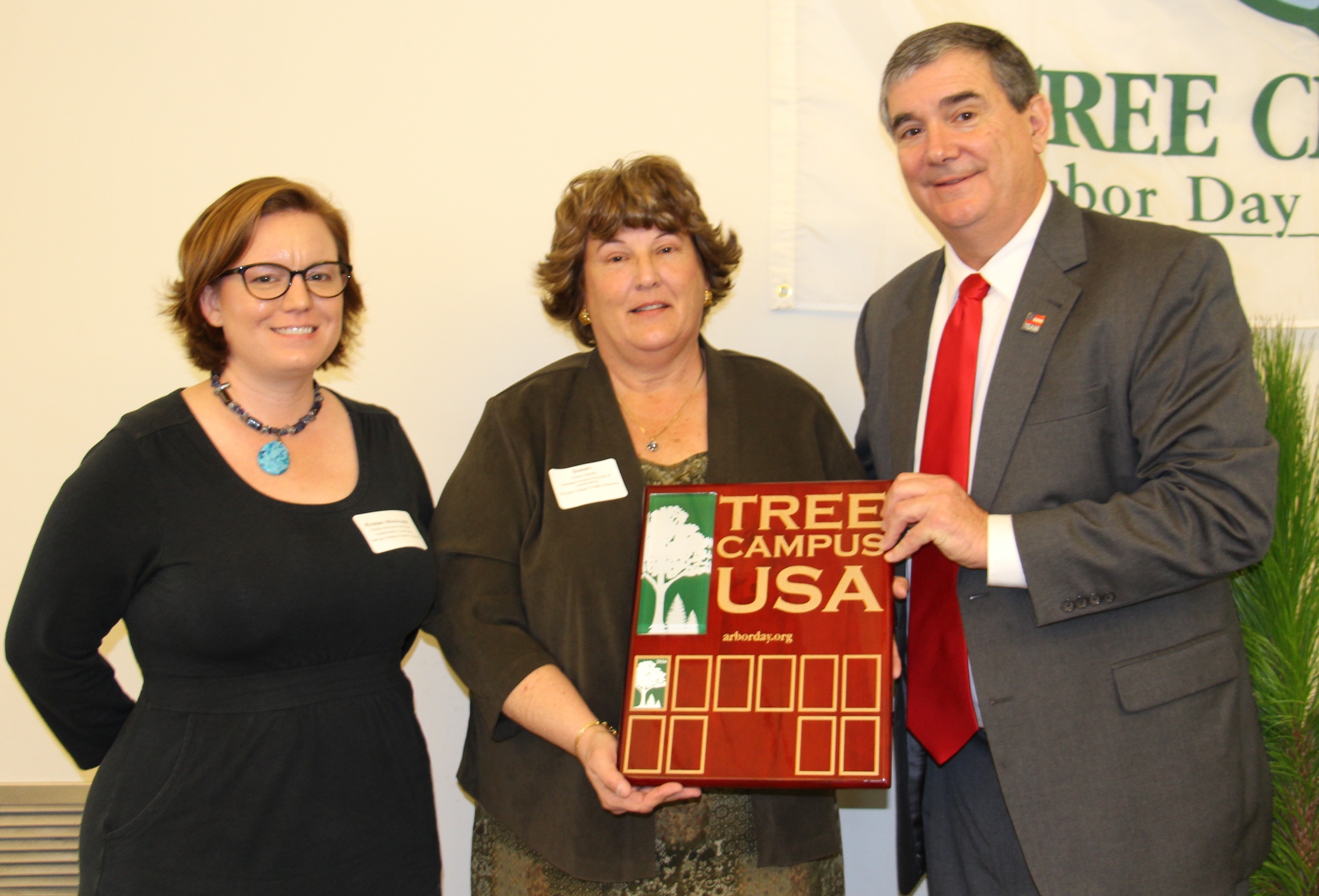
At the symposium, Ms. Daniels and I accepted the Tree Campus USA award for Georgia College (GC). Started in 2008, Tree Campus USA assists colleges and universities in building healthy and sustainable forests. According to this 2015 survey, Tree Campus USA programs are in effect at 294 schools coast to coast, with 3,586,678 students enrolled at a Tree Campus. In 2015, those schools planted 38,473 trees and spent $46,406,176 on tree planting, care and management. This is money well spent, as the program provides many benefits to the campuses, which are outlined in this brochure. To receive the Tree Campus USA designation, schools must meet the following five standards: 1. establishment of a campus tree advisory committee; 2. evidence of a campus tree care plan; 3. dedicated annual expenditures for a campus tree program; 4. involvement in an Arbor Day observance; and 5. instituting a service learning project. In achieving Tree Campus USA status, the GC community has proven, yet again, it is committed to the mission set forth by the GC Green Initiative for design. This mission is to “[i]dentify and implement sustainable practices for building and landscape design on Georgia College campuses.”

georgia-college-arbor-day-2017

Fig. 2. Georgia Forestry Commission Director, Robert Farris congratulates Susan Daniels and Kristen Hitchcock for helping Georgia College & State University become a Tree Campus USA community.

GC could not have achieved the Tree Campus USA status without the hard work of Ms. Daniels, the Assistant Director for Landscaping and Grounds. Throughout her more than 25-year career on campus, she has championed sustainable landscaping practices. She and her crew have composted lawn material; installed porous pavers; and practiced xeriscaping, among many other projects. Ms. Daniels explained that “tree planting is not new [to the campus]” because since 1998, the Grounds Department and Kendall Stiles have coordinated the Giving Trees program, based on The Giving Tree by Shel Silverstein. “Read the book. It says it all,” says Ms. Daniels, referencing the importance of the tree plantings. Moving the Tree Campus initiative forward, she will be assisted by the other members of  GC Tree Campus committee – myself; GC students Emma Brodzik and Julia Steele; GC Grounds Department Supervisor Aaron Seay; GC Chief Sustainability Office Lori Strawder*; retired GC botany professor Harriet Whipple; and Georgia Urban Foresters Beryl Budd and Seth Hawkins.

Because the Mayors Symposium was held on Valentine’s Day, the theme of loving your canopy was integrated into the day; and there are many reasons to love our trees, which provide benefits such as aesthetic appeal, shade and carbon sequestration. By ensuring that GC is a Tree Campus USA, Ms. Daniels has implemented a long term, sustainable management system to maintain these benefits for generations of our faculty, staff, students, and visitors. Regarding her reasons for starting this program at GC, Ms. Daniels noted that “I am a horticulturist. I have a strong mind body connection to nature” and expressed the “tree-mendous support, encouragement, and inspiration” she has received from GC President Dr. Dorman, Vice President for Finance and Administration Susan Allen**, staff and students. The support for and value of her hard work is reflected in the words of our community members below.

*“Personally, I love trees and, generally, anything green, so I am completely in support of more trees on campus. Kudos to Ms. Daniels and the Grounds & Landscaping crew for making the campus look and stay absolutely beautiful! Last year, this department kicked off the Arbor Day celebration by inviting departments, organizations and groups on campus to come out and help plant trees. The Office of Sustainability contributed by helping to plant trees on more than one occasion and will continue to support the tree population. The efforts of the Grounds & Landscaping Department in helping obtain the Tree Campus USA designation is greatly appreciated! Having this designation is commendable and another “notch in the belt” for GC on its path to becoming a more sustainable or “green” campus. This designation expresses further the commitment of GC’s positive impact on the environment. Trees are essential for the campus, not only for the aesthetics and beauty of the campus; also for the quality of air and plant life around the campus and community beyond. The annual addition of trees to the campus represents a life-long legacy GC makes to future generations to come.” – Lori Strawder, Chief Sustainability Officer.

“I am proud of Susan Daniels and her staff whose creative work on our natural environment at Georgia College has gotten national recognition.  The loving attention that she and her staff give to the campus trees, flowers, and shrubs is evident and was made even clearer to me many years ago when Susan sent an email message to the campus explaining why they had to cut down one of the old oak trees on front campus.  After the diseased tree was cut down, Susan had a ring from the tree placed in the campus natural history museum.  Although not in its original form, thanks to Susan and her staff, we still have the tree on our campus.” – Dr. Sandra Godwin, Associate Professor of  Sociology

“Georgia College is gifted to have over 400 acres of landscape over four campuses. Two of our satellite campuses have extensive natural forests serving both wildlife and human interests. Trees provide shade, habitat, water purification, and oxygen renewal in addition to their scientific and aesthetic benefits. On our main campus, the magnificent native and exotic trees are part of our institutional character, creating delightful settings for students to stretch out and be a part of nature. The Tree Campus USA designation will help us manage, maintain, and protect our extremely valuable trees, while bringing attention to the benefits that urban and natural forests provide. In several classes, we have mapped out our forest, including trees that provide edible fruits and nuts!” – Dr. Doug Oetter, Professor of Geography

**”I’d like to extend an ecstatic congratulations to Susan Daniels and our fantastic Georgia College Grounds Department Team for their leadership efforts in making Georgia College a Tree Campus USA affiliated University.  In bringing together numerous student organizations and faculty and staff groups across campus, they were able to plant 3,906 trees—an amazing and collaborative effort that supports countless benefits to the community at large.  This accomplishment demonstrates Georgia College’s intentional focus and commitment to sustainability.  Keeping a healthy inventory of trees on our campus is just good stewardship of resources and aligns with our institutional strategic plan. I can’t imagine Georgia College without the multiple benefits of our majestic canopy of trees; the campus’ aesthetic appeal would be negatively impacted without the beauty of our oaks, pecans, ginkgos, dog woods, crape myrtles, and magnolias.  Additionally, the trees create a healthier environment, helping to clean our air and save energy—Tree Campus USA reports that a single tree can absorb as much as 48 pounds of carbon dioxide per year; one large tree can provide a day’s supply of oxygen for up to four people; and tree shading can help to keep buildings cooler, leading to electrical savings. Needless to say, I love trees and am extremely proud of the progress our campus is making to help keep America green!” – Susan C. Allen, Vice President for Finance and Administration


Georgia College is a Tree Campus USA!

Thanks to the hard work of countless individuals, Georgia College has been designated as a Tree Campus USA!  This impressive achievement helps our campus protect and promote trees as a critical part of sustainability.  The GC Grounds Department has taken the lead on the project, which requires our campus to maintain an inventory of trees, provide for the protection of trees, and involve student organizations and others to plant more trees.

Please review the Frontpage Announcement about the designation.

To get your group involved with planting trees, please contact Susan Daniels, the Assistant Director for Grounds.

RecycleMania 2017 Has Begun

Georgia College (GC) has entered the RecycleMania 2017 competition. Beginning in January of 2001 between just two schools, Ohio University and Miami University, RecycleMania (Fig. 1) now includes the voluntary participation of schools across the United States and Canada. RecycleMania is not only a competition but also a benchmarking tool which occurs over an eight-week period each spring. During this time, on a weekly basis, colleges and universities report their recycling and trash amounts. They are then ranked against each other in various categories based on recycling rates per capita and recycling rates as a percentage of total waste, as well as which school generates the least amount of combined trash and recycling. As the rankings are updated weekly, schools motivate their students to increase their position in the standings. The winning school in each category gets certain bragging rights, such as national recognition on the RecycleMania website and in a press release, receiving an award made of recycled materials, and hosting the travelling trophy for the year.

RecycleMania Logo 2017

Fig. 1. RecycleMania 2017 Logo.

One of GC’s sustainability goals is to increase our recycling rates, which can be achieved, in part, by constantly educating the faculty, staff, and students about our efforts. With built-in promotional resources and helpful kits for activity planning, the RecycleMania competition provides a powerful, and prolonged, educational toolkit which can be adapted and implemented on campus. In addition, two of four RecycleMania goals listed on their website are directly aligned with GC’s. These goals are to “motivate students/staff to increase recycling efforts and to reduce waste generation” and to “generate attention and support for campus recycling programs.”

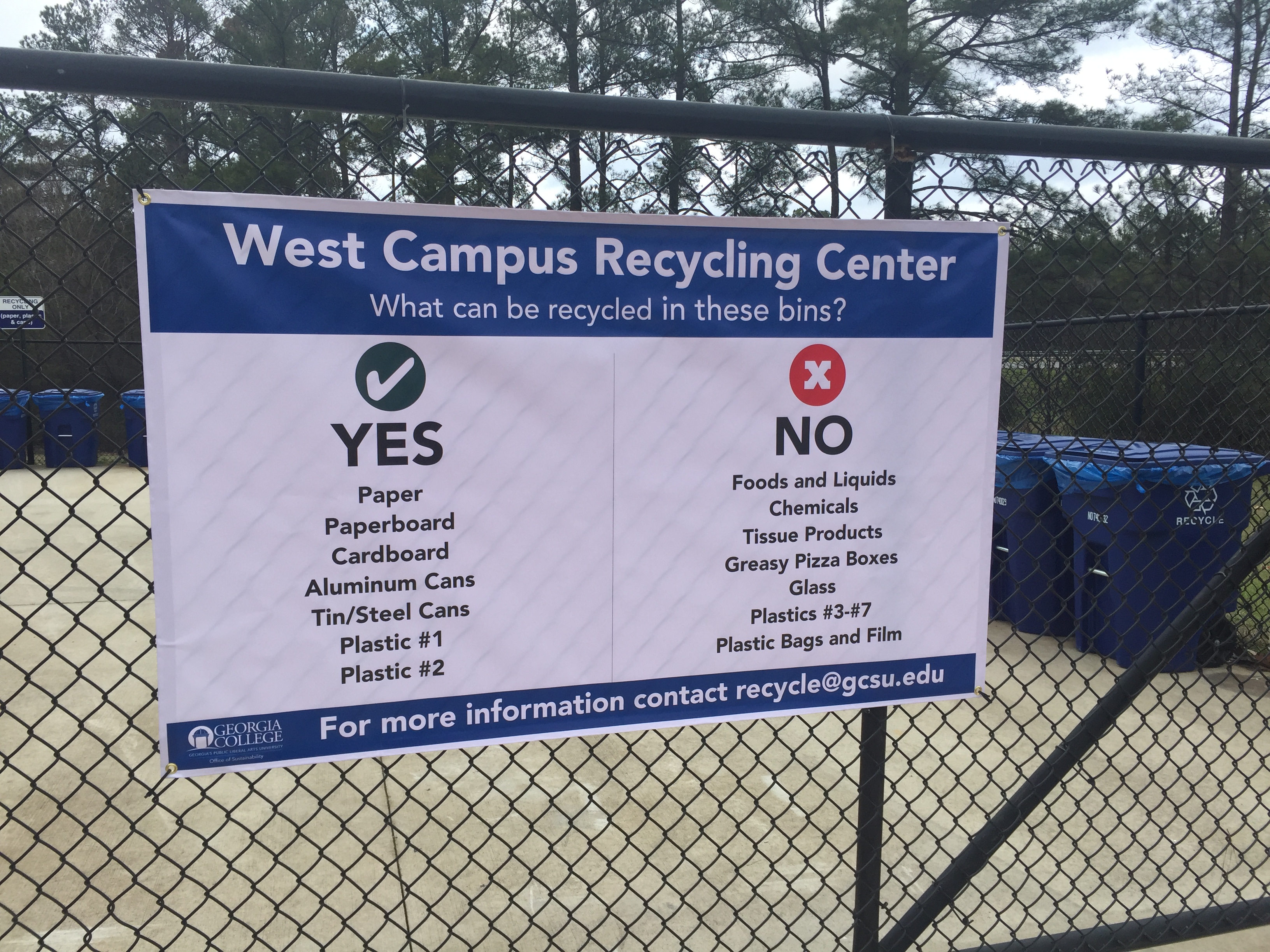
During the eight weeks of competition, the GC Office of Sustainability and Sustainability Council has already, and will be, hosting and promoting a variety of activities that are tied into the theme of recycling. One of these events, the Student Government Association (SGA) water bottle exchange, was held on February 6, 2017  (Fig. 2 & Fig. 3). The SGA collected 200 water bottles for recycling and in turn handed out all 100 of the reusable water bottles which they purchased for the event. Additionally, a newly designed West Campus Recycling Center banner (Fig. 4) was placed on February 9, 2017, to remind students of the materials that can and cannot be placed into the blue bins. Other events to watch for include social media informational campaigns, recycling volunteer days, and swag giveaways. SGA Bottle Exchange 2

Fig. 2. GC SGA Representatives Handing Out Reusable Water Bottles.

SGA Bottle Exchange 1

Fig. 3. Plastic Water Bottles Collected By the GC SGA.

Throughout the competition, in addition to participating in the events, you can assist our efforts by recycling correctly on campus. GC accepts paper, paperboard, cardboard, metal cans, plastic #1 and plastic #2. All recyclable materials can be placed into the blue bins found on campus because GC uses a single stream recycling system. These materials, however, need to be cleaned of food and liquids before being placed into the bins. Items which should not be placed into the recycling containers include glass, plastic bags and film, plastics #3-#7, wood, tissue products, and chemicals. Please keep participating and recycling on campus to help make our RecycleMania 2017 campaign a successful one!

West Campus Recycling Center Banner

Fig. 4. The New West Campus Recycling Center Banner.

Come Work at the West Campus Garden!

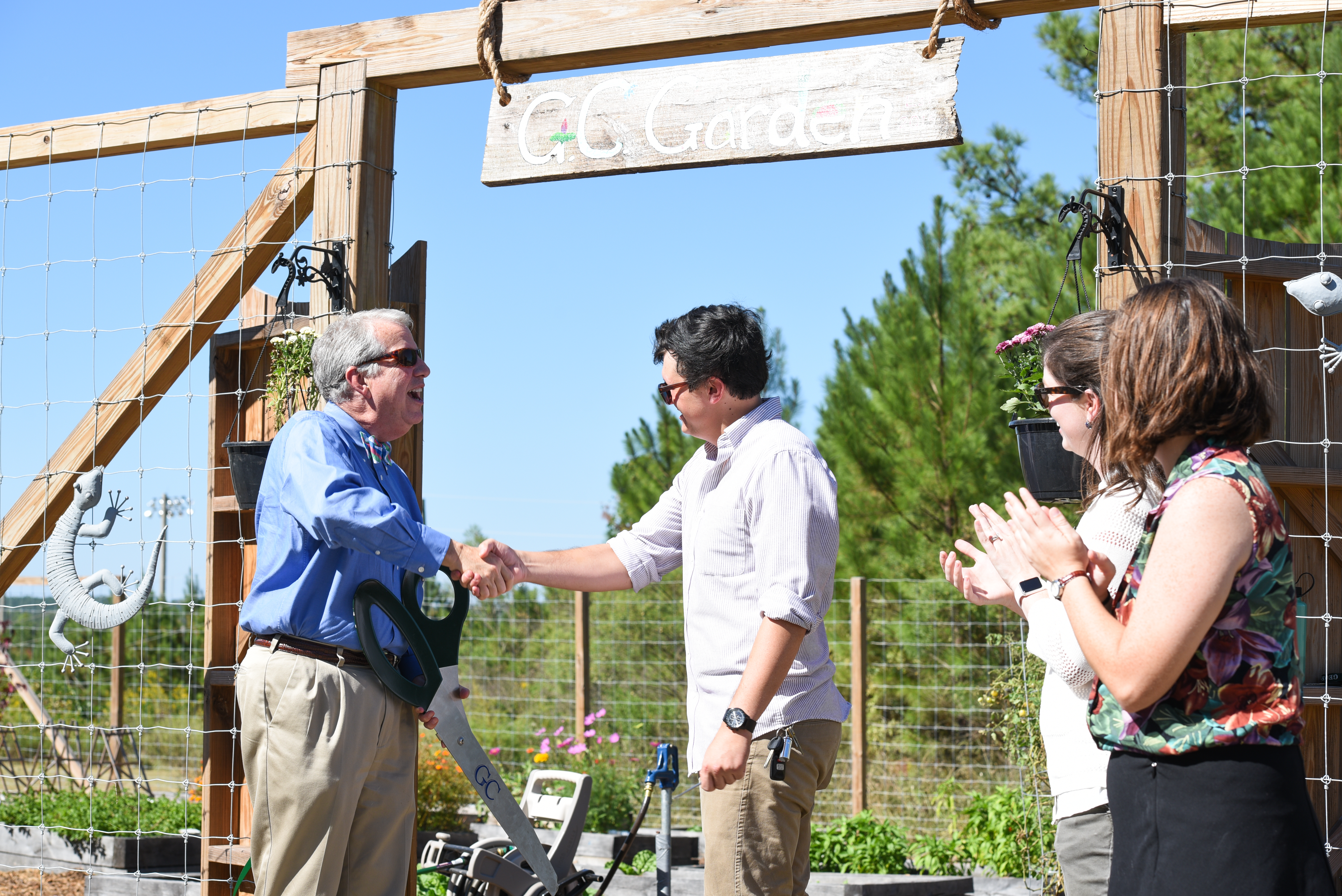
Located on West Campus, near the baseball field, Georgia College (GC) has a community garden, which is fittingly called the West Campus Garden and open for the enjoyment of GC faculty, staff, and students. The garden was made possible through the work of GC alum Lindsay Crowe and current GC student Andrew Wright. These two students submitted a proposal to the Sustainability Council for funding under the Sustainability Fee program. The proposal was approved during the spring of 2015; construction began in the summer of 2015; gardening began on August 29, 2015; and a ribbon cutting ceremony was held on October 5, 2016. The area is home to a 50 foot by 70 foot plot enclosed by 10 foot tall deer fencing, 20 raised beds each equipped with drip irrigation lines, a compost bin, bird houses, homemade stone signs, and fruit trees. In addition, a metal table is available for you to sit and enjoy the view.
West Campus Garden Ribbon Cutting

Fig. 1. West Campus Garden Ribbon Ceremony, October 5, 2016.

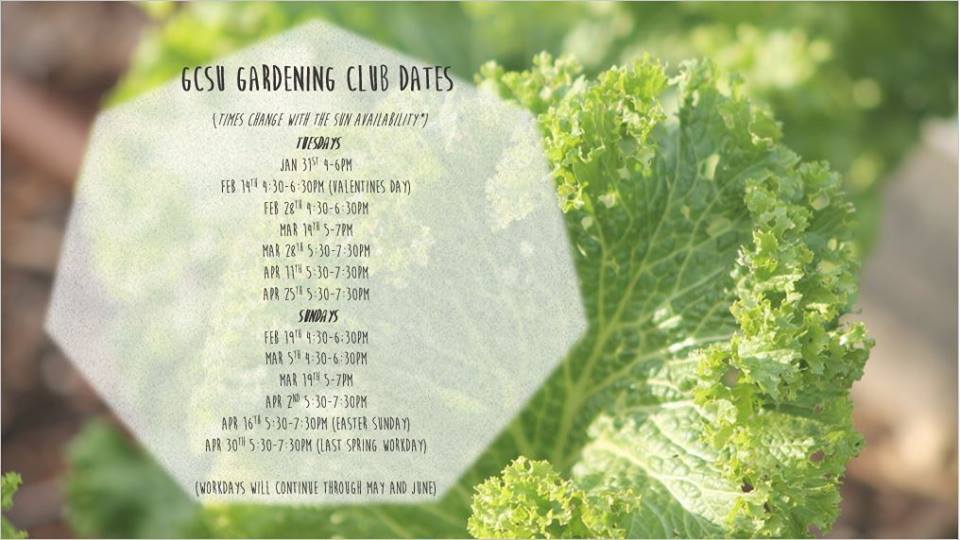
Currently, the Gardening Club oversees much of the maintenance and promotion of the garden. To accomplish this, they often provide the produce from the garden to GC staff and students at tabling events. They also hold regular workdays, which are necessary for tasks such as planting, laying mulch, and harvesting. For the spring semester, the workdays have been scheduled for Tuesdays and Sundays (Figure 2) and will be held as long as the weather permits. These workdays are open to the GC community and involvement is welcome and encouraged, for garden aficionados and enthusiasts alike.
garden-club-workdays

Fig. 2. West Campus Garden Workdays, Spring 2017.

Volunteering during the West Campus Garden workdays is a wonderful way to enjoy the outdoors this semester and also help this campus sustainability initiative thrive. Additionally, it may provide some health benefits. Below are just a few quotes from the peer reviewed literature which indicate a link between urban nature spaces and human health.

“[T]here is a growing body of evidence showing [urban nature] has links to improved physical, psychological and social well-being.” – Shanahan et al. 2015. BioScience. 65(5): 476-485.

“Regardless of whether Portland residents used them or not, urban nature parks had an effect on our sample’s sense of neighborhood social health.” – Baur et al. 2013. Journal of Park and Recreation Administration. 31(4): 23-44.

“In addition to the physical effects, many of the studies demonstrate the benefits to mental health of green space.” – Flaskerud. 2014. Issues in Mental Health Nursing. 35: 975-978.

The West Campus Garden has been a welcome, and welcoming, addition to the GC campus; and there are many plans in the works for its expansion. In the meantime, if you would like some more information about getting involved with its success, please contact the Gardening Club or visit their Facebook page.
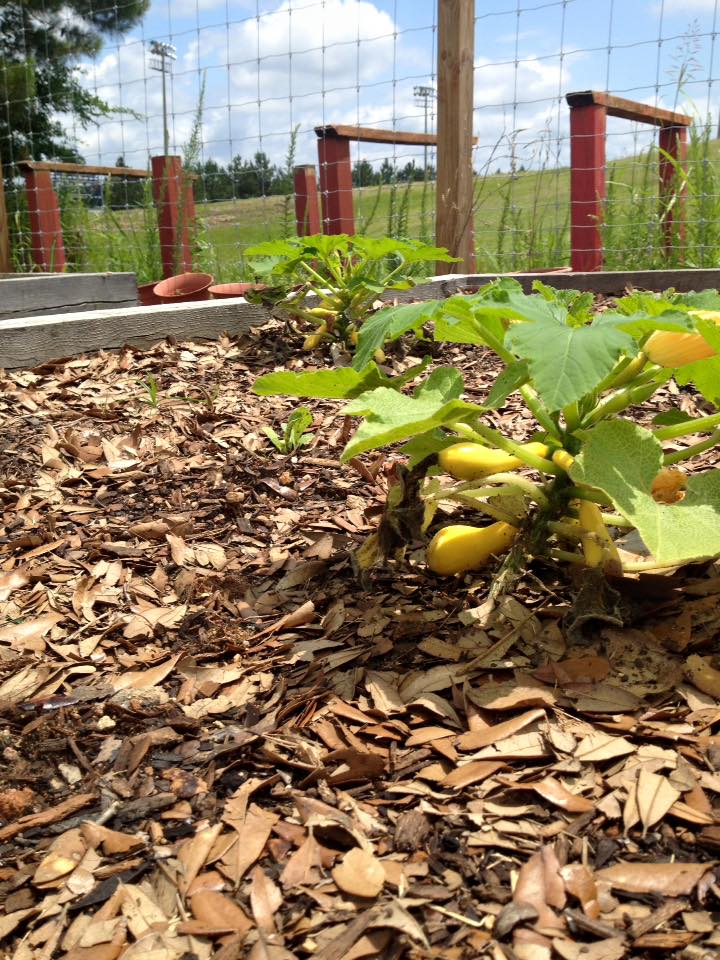
West Campus Garden Vegetables

Fig. 3. Vegetables at the West Campus Garden.


Sustainability in Action: Aerial Lift Safety Training at GC

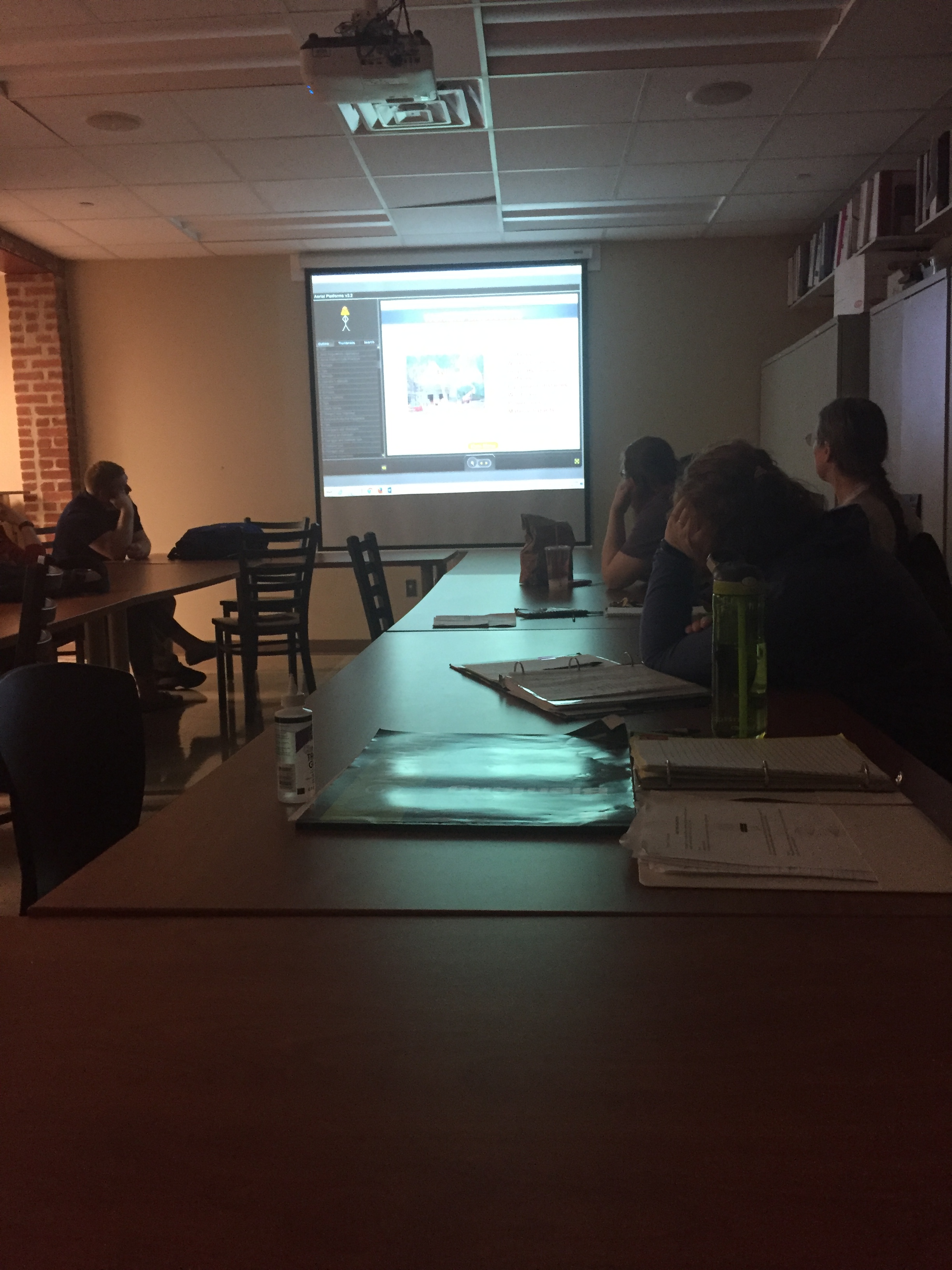
When he came to work for Georgia College in 2011, Assistant Director of Environmental Health and Safety and Fire Safety Shea Groebner began touring the college to meet and understand the safety needs of our many departments. In doing so, he observed members of our Theater Department working on aerial lifts. An aerial lift is any vehicle-mounted device which is used to elevate personnel. Within the Theater Department, they are often used to work on overhead lighting and scenery. The aerial lifts present potential slip and fall hazards, which Mr. Groebner decided to mitigate through providing training sessions to our students, faculty, and staff working with the equipment in the Theater Department.

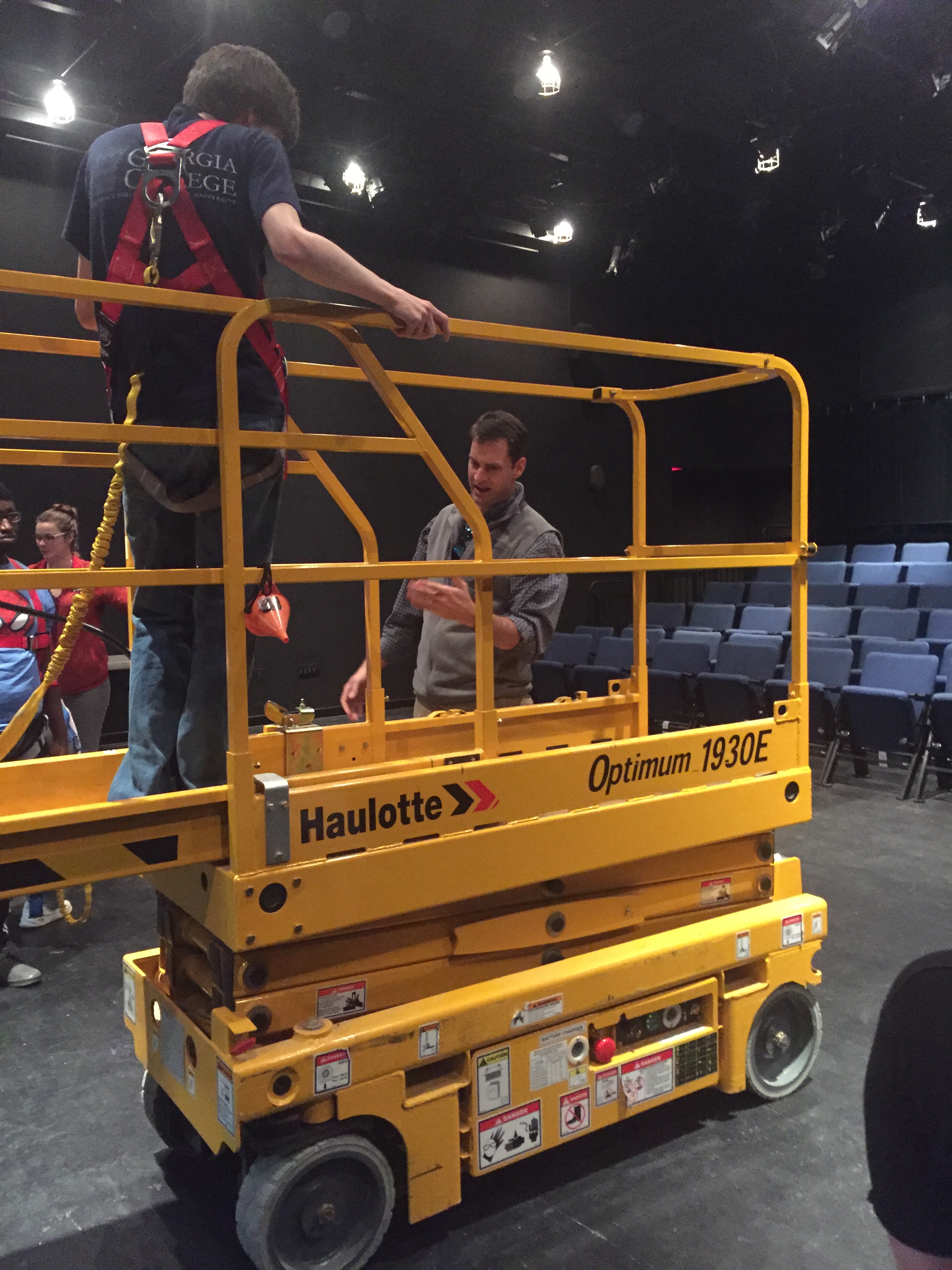
The specific type of aerial lift used by our Theater Department is the scissor lift. This type of lift is portable, is hydraulic-powered and has a platform that can be raised into the air directly above the base. Within the Occupational Safety and Health Administration (OSHA) regulations, scissor lifts are classified as scaffolds; thus, standard §1926.451 applies to their use. Other types of aerial lifts are regulated under §1926.453. They are regulated differently because the aerial lift requirements (§1926.453) utilize the definition of aerial lifts contained within the American National Standards Institute (ANSI) A92.2-1969 standard. The ANSI standard definition includes extensible boom platforms, aerial ladders, articulating boom platforms, vertical towers, and a combination of those devices.

Mr. Groebner decided that, to fully ensure the safety of our Theater Department members, Georgia College would apply all of the above mentioned regulations to the scissor lifts. Therefore, when operating the lifts, users must observe many safety practices. These practices include ensuring all users are properly trained, inspecting the lift and area prior to use, wearing body harnesses and tie-off ropes, not exceeding weight limits, not exceeding reach limits, and being aware of overhead clearances.

aerial-safety-training_theater-dept_1-26-17

Fig 1. Theater department members watching safety video.

aerial-safety-training_theater-dept_1-26-17_3

Fig 2. Mr. Groebner explaining safety in the black box.

During the fall of 2010, not long before Mr. Groebner began working at Georgia College, a student was unfortunately killed at the University of Notre Dame during a scissor lift accident. The student was employed by the college and was using the lift to film football practice. The student had reportedly not been trained properly and lifted the platform over 39 feet. On that day, wind gusts of 50 mph were reported, and the lift was overturned.

Accidents such as this one remind us that there are hazards associated with the work we do as students, faculty, and staff on a college campus. In remaining vigilant and properly training the members of our community, Mr. Groebner is helping to ensure that these accidents do not occur at Georgia College. It is easy to view sustainability as applying only to the environment. However, within a robust sustainability plan, the triple bottom line accounting framework of people, planet, and profit is included. Ensuring your health and safety is vital to Georgia College’s sustainability mission because we cannot be truly sustainable if we cannot sustain you.

If you are interested in further reading, please visit the links below. For any safety questions you have, contact Shea Groebner (shea.groebner@gcsu.edu; 478-445-8690).

References

  1. Occupational Health and Safety Administration. Safety and Health Regulations for Construction. Scaffolds: General Requirements. CFR 1926.451.
  2. Occupational Health and Safety Administration. Safety and Health Regulations for Construction. Scaffolds: Aerial Lifts. CFR 1926.453.
  3. Occupational Health and Safety Administration. August 1, 2000, Memo from Russell B. Swanson to W. Shaun Rainey. Re: Subpart “L” – Scissor Lifts.
  4. Occupational Health and Safety Administration. OSHA Quick Card. Aerial Lifts: Protect Yourself.
  5. Occupational Health and Safety Administration. Hazard Alert. Student Worker Killed While Filming Football Practice From a Scissor Lift.