October 16th is World Food Day! Today is the perfect opportunity to reflect on the fundamental flaws within our global, national, and local food systems, as well as reflect on what part we each play as the individuals that make up these systems. If you are interested in learning more about this topic, please check out our last blog post, “The Cost of Inefficient Food Systems”, or choose from the following list that has been put together by the Office of Sustainability.
For the past several decades, climate scientists have warned that agricultural industries must undergo significant changes if we are to avoid catastrophic levels of warming to the planet. The global agricultural industry has a notoriously large carbon footprint and, alongside transportation, is one of the largest emitters of carbon dioxide and other harmful greenhouse gases. In the U.S., agricultural land use accounts for 20% of the country’s carbon dioxide emissions. The amount of freshwater and other resources used to maintain livestock alone has a massive impact on the environment, and when combined with harmful techniques such as slash-and-burn agriculture, deforestation, overgrazing, and the use of chemical fertilizers, this could spell disaster for these areas if more sustainable methods are not introduced. Agriculture is just one facet of the food industry that contributes to global climate change, but nearly every stage of food, whether it be production, transportation, distribution, or consumption, has its own adverse effects on the environment.
Food Loss vs. Food Waste
Food waste, as the US Department of Agriculture’s (USDA) defines it, is “…food discarded by retailers due to color or appearance and plate waste by consumers.” Food loss, however, is considered to be any food products that are unused or thrown away before being purchased by consumers. The majority of food loss occurs during the production stage, mainly because produce items do not meet certain aesthetic standards and are therefore rejected by supermarkets. There is also a significant portion of food that spoils during transportation, and is therefore uneaten. This is also considered a form of food loss because it occurs before reaching the hands of consumers, meaning that the 49 million tons per year that are wasted in individual households is just a fraction of the total food products that actually go to waste.
The Environmental Impact of Uneaten Food
Since only about 5% of leftover food products get composted, the vast majority of them end up in landfills, making it the largest source of solid municipal waste in the United States. When these food products begin to decompose, they release a powerful greenhouse gas called methane, which is 86 times more powerful than carbon dioxide. Food waste is also responsible for 25% of freshwater consumption and is the leading cause of freshwater pollution.
In 2020, the US Senate passed a resolution that officially designated today, October 7th, as Energy Efficiency Day “in celebration of the economic and environmental benefits driven by efficiency”. By proclaiming this day as a national holiday, the major goals of this resolution are to save money, cut pollution, and create jobs by switching the majority of our energy use to renewable sources. As of right now, 29 universities, state, county, and city governments have signed on to participate in this year’s Energy Efficiency Day. It is common knowledge among scientists and environmentalists alike that the burning of fossil fuels for energy use is the largest contributor to climate change. But does it have to be? Many argue not. Economists, climate scientists, and healthcare professionals (among many others) have offered compelling evidence of the benefits of renewable energy.
General Facts about Energy Efficiency
Since 1990, savings from energy efficiency gains have averted the need to build 313 large power plants and has delivered cumulative savings of nearly $790 billion for Americans. (ACEEE)
Efficiency could provide one-third of total expected electricity generation needs by 2030, avoiding the need for an additional 487 large power plants.
Energy efficiency employs 2.25 million people in the US today – more than the number of people who work in the coal, oil, gas, electricity and even renewable energy industries combined. (ACEEE)
Rural households, especially low-income, nonwhite and elderly, spend an average of 40% more of their incomes on energy than their metropolitan counterparts. Energy efficiency upgrades could lessen these energy burdens and save households more than $400 a year. (ACEEE)
Reducing annual electricity use by 15% nationwide would save more than six lives every
day, prevent nearly 30,000 asthma episodes each year, and save Americans up to $20
billion through avoided health harms annually. (ACEEE & Physicians for Social Responsibility)
Bonus Fact: The United States is the second largest consumer of energy.
Energy Efficient Employment in America
One of the most widely-used counter arguments for renewable energy sources is that it will result in significant job losses for those working in the coal, oil, and gas industries. However, studies show that energy efficiency is one of the fastest growing job sectors in the US, employing nearly 2.5 million people. There is substantial projected growth for all areas of industry within the energy-efficiency sector, including manufacturing, construction, and wholesale trade. With the continual advent of renewable technology, there are more and more opportunities for businesses and organizations to provide energy efficient options to consumers as well as become more energy efficient themselves.
While reducing inefficient energy use will require the cooperation of the coal, oil, and gas industries, there are many options for individuals looking to reduce their personal energy use:
Held every October, Campus Sustainability Month is an international celebration of sustainability in higher education. Throughout the month, colleges and universities organize events on campus and elsewhere to engage and inspire incoming students and other campus stakeholders to become sustainability change agents. These events include teach-ins, sustainability pledge drives, zero-energy concerts, waste audits, green sporting events, letter-writing campaigns, service projects and much more!
Each week during the month of October will have a different theme, each focusing on one aspect of sustainability:
October 5-11: Energy Efficiency Week
Topics will include water and air quality, pollution, fossil fuels, and energy efficiency
Featured Events:
Energy Efficiency Virtual Roundtable (Register for FREEhere!)
October 12-18: Food Systems Week
Topics will include agriculture, food waste, and food insecurity
Featured Events:
October 16: World Food Day
Virtual tour of GC’s Community Garden and Compost Facility
Swipe Out Hunger Meeting
October 19-25: Global Climate Change Week
Topics will include carbon emissions, renewable energy, and green infrastructure
Featured Events:
Virtual screening of The Human Element
Showcase of Luma, the Solar Flower
October 26-31: Zero Waste Week
Topics will include recycling, upcycling, compost, and sustainable shopping
Featured Events:
Hard to Recycle Items Collection Drive
Virtual Zero Waste Workshop
***All dates for events can be found on the calendar below.
October at a Glance:
If you are interested in participating in any of these events or learning more about the topic of sustainability, please fill out the form below and let us know which events you are interested in and the Office of Sustainability will follow up with more detailed information about each event you select!
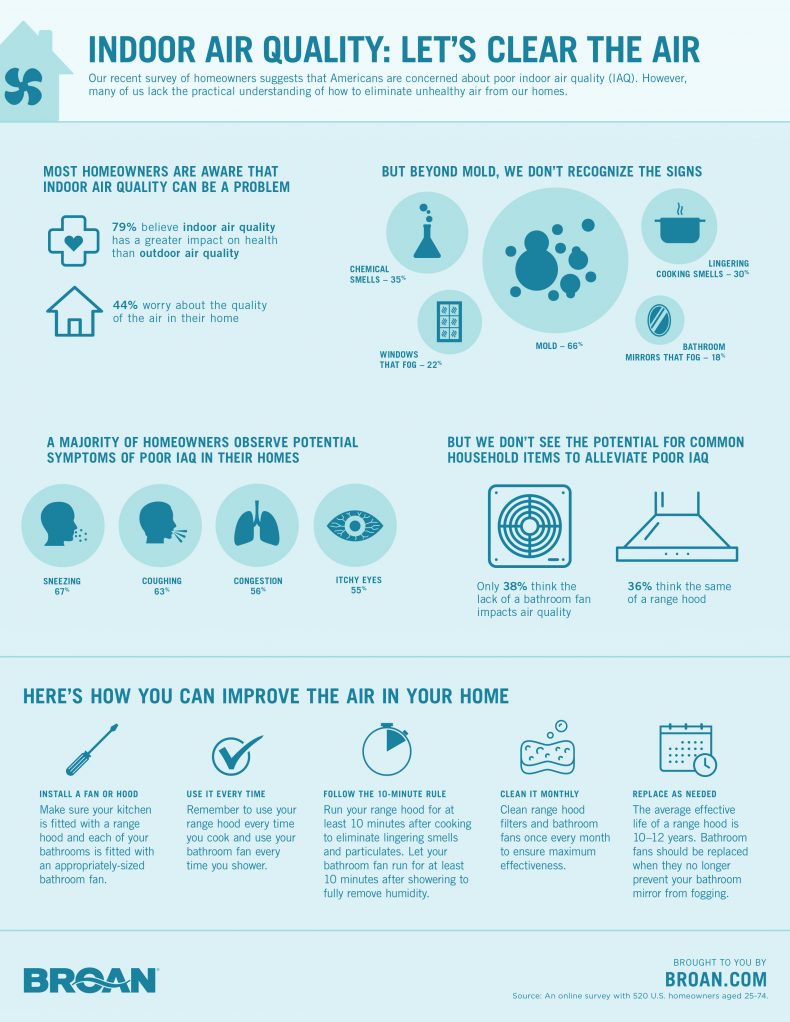
The consequences of poor air quality over long periods of time, for both humans and the rest of the natural environment, are appearing all across the globe. In fact, the effects of poor air quality are so intense in certain areas, the WHO estimates, “… air pollution causes about 2 million premature deaths worldwide per year”. Global warming, photochemical smog, acid rain, and depletion of the ozone layer are only a handful of the side-effects of our globe’s deteriorating air quality. Even in the United States where, for over 5 decades, we have had legislation specifically designed to tackle this issue, the adverse impacts of air pollution are undeniable.
For instance, the Pacific Northwest region of the United States has had consistently bad air quality for decades. On any given day, this area (including Washington, Oregon, and Northern California), will be ranked “Unhealthy” to “Very Unhealthy” due to the high levels of ground-level ozone, particulate matter, carbon monoxide, sulfur dioxide, and nitrogen dioxide: the five major air pollutants measured by the EPA to gauge an area’s air quality. Current air quality dangers in the Pacific Northwest are fueled by annual wildfires. The smoke from these fires contains copious amounts of gases and fine particles that remain in the air and in the environment long after the fires have been put out. However, natural emitters of these substances are only responsible for a fraction of the pollution in our air. Anthropogenic sources in the United States, and worldwide, are the largest contributing factor to poor air quality.
It is no secret that industrial agriculture is one of the largest contributors to climate change; the production of beef in the United States alone accounts for 3.3 percent of our greenhouse gas emissions, not including any other form of agriculture or the resources it takes to distribute these goods. Significant amounts of pollutants are constantly being released from CAFOs, such as ammonia, hydrogen sulfide, particulate matter, volatile organic compounds, and pesticides, into the surrounding areas. Due to the concentration of these chemicals, farmers and other individuals living in close proximity to agricultural sites are particularly susceptible to the adverse health effects of poor air quality.
Although major improvements in air quality will take the cooperation of many big businesses, organizations, and politicians, there are actions we can take on an individual level to improve the quality of our air at home!
Number 1: Make Your Home a No-Smoking Zone! Cigarettes contain over 4,000 chemicals that have been proven to cause or worsen certain health conditions such as cardiovascular disease, asthma, other respiratory illnesses, and certain cancers. Health experts suggest that eliminating second-hand cigarette smoke is the single most important aspect of keeping the air quality of your home clean.
Number 2: Skip Aerosols and Air-Fresheners Altogether! Using natural essential oils and plant extracts rather than synthetic air fresheners can reduce the amount of chemicals being put into your air. Here is a recipe for a natural air freshener:
“A common way to use essential oils as a way to freshen the air in your home is by following this recipe.
Number 3: Pot a Few Plants! Along with being an aesthetically pleasing part of your home decor, certain plants such as aloe vera, ferns, or spider plants act as living air purifiers by absorbing chemical pollutants put out by synthetic materials many of us use at home. However, if you are a parent or pet-owner, some of these plants may be poisonous if ingested. It is important to do your research to find the plant that is best for your home.
Number 4: Open Your Windows Regularly! Opening your windows and doors every so often will release the stale air that has built up in your home outside, while allowing fresh air in. This can be a great tool for regulating the humidity in your home, which can reduce your chances of getting dust mites and mold build-up.
Number 5: Go Fragrance-Free! Opting for fragrance free or naturally scented products such as perfumes, deodorants, laundry detergents, dish soaps, air fresheners, etc. will reduce the amount of harsh chemicals being put into your home’s air system.
For five decades, the Environmental Protection Agency (EPA) has worked diligently to ensure that America’s natural landscapes and resources are handled with the utmost care. Since their inception in 1970, the organization has enforced significant regulations, implemented National Compliance Initiatives, and passed more than 50 laws and executive orders in an effort to create a cleaner and healthier America.
Quickly following the publishing of Rachel Carson’s Silent Spring, there was a growing concern among citizens about environmental issues that, up until that point, had gone almost entirely unnoticed. However, when public spaces such as beaches and rivers that were once used as vacation spots for many families started to become overrun with pollutants, there seemed to be a newfound understanding of how directly the health of the environment affects human life. This heightened concern from the public placed pressure on the Nixon administration to take action against the degradation of our natural resources. In his presentation to the House and Senate regarding environmental protection, Nixon proposed stricter air quality standards and guidelines, increased taxes and legislation on the use of polluting chemicals, launching federally-funded research, and a four billion dollar budget for the improvement of water-treatment facilities alone. To tackle these projects (among others), Nixon’s environmental council recommended that all environmental efforts be concentrated under the responsibility of one agency, thus the EPA was born.
In their relatively short time as an agency, the EPA has made major strides in the fields of environmental health, natural land conservation, resource use, and environmental education. Many of the EPA’s most significant impacts were made during their first few years, including the Clean Air Act (1970), Safe Drinking Water Act (1974), Clean Water Act (1972), and the Ocean Dumping Act (1972). Due to the quick action taken by the EPA, American citizens have largely been able to avoid the damaging health effects of environmental degradation such as cardiac illness, waterborne disease, and lower-respiratory infections that remain prevalent in many other parts of the world.
Protesters shortly before the passing of the Clean Air Act (1970).
The progress of the EPA has not come without backlash, however. Despite their efforts to improve environmental conditions for everyone, over the years they have received harsh criticism and pushback from opposing political groups. Nevertheless, the EPA has continued to push forward with projects and legislation that act in the best interest of our people and our planet.
According to Section Two of the Sustainability Council’s bylaws, its purpose is to, “…identify and promote actions and initiatives that will enhance sustainability on campus” and to, “…incorporate the practices of sustainability and environmental planning into the short and long-term activities of the university…”. One of the ways the Sustainability Council aims to accomplish these goals is with the advent of the Sustainability Fee Program (SFP), a subset of the Sustainability Council at Georgia College. It consists of four student members, a Director and three Assistant Directors, who focus primarily on determining how the funds collected from each students’ Sustainability Fee will be used to make Georgia College a more sustainable campus by reviewing the grant proposals that are presented throughout the school year. At least once per semester, the Chair of the Sustainability Council will request grant proposal submissions from classes, student organizations on campus, or directly from individual students. Applications for grant proposals may be submitted to green@gcsu.edu. Once applications have been submitted, they are then reviewed by the Director of the SFP for completion and accuracy and given suggestions for improvements that could be made before the final submission.
Academic Year 2020-2021 Student Members:
Director: Meagan Sullivan: I am a senior Geography major with a minor in Global Health and a certificate in Geographic Information Systems (GIS). As well as being a member of the Sustainability Council, I was also recently hired as the Office of Sustainability’s Community Outreach Intern. I have a special interest in environmental health and how it impacts human health; I believe that moving toward a more environmentally sustainable society is an imperative part of repairing and maintaining the health of our planet and all things that inhabit it.
Assistant Directors:
Jessica Eleazer: I have a major in psychology, a minor in environmental science, and am pursuing the sustainability certificate. Sustainability can have a great beneficial impact on the world, and can hopefully allow the world to thrive for many more years to come. I volunteer at an animal sanctuary in Good Hope, GA. This has helped me understand the impact animal agriculture has on the world, and how precious all beings’ lives are.
Ally Esmond:Hello! My name is Ally Esmond. I am a sophomore Environmental Science major with a minor in Geology and a certificate in Geographic Information Science. Some of my favorite hobbies are reading, playing guitar, hanging with friends, and long walks in the rain. Sustainability to me means finding creative methods to preserve our resources and environment.
Savannah Taylor: I’m a World Languages and Cultures, and Economics double major- my concentration is in Spanish and I love to help tutor students in the language lab. I am also a part of the GCSU Leadership Certificate Program and am pursuing another certificate in Sustainability. I love sustainability because I think it’s something anyone can participate in as it stretches across all disciplines. I work for the Office of Sustainability as the Garden Manager so I’m usually covered in dirt, but I’m always looking to teach students the gardening basics and look forward to getting even more people involved in our campus garden this year!
Sustainable habits should last a lifetime, not for just a few days or weeks. With the number of coronavirus cases increasing each day, government officials are strongly advising citizens to stay in their homes which leaves many of us with extra time on our hands. We’ve decided to use that extra time to practice living a more sustainable lifestyle. Do you want to try it too? Lucky for you, we’ve created an 8-week transformational guide that allows you to gradually transition to a more sustainable lifestyle!
*Do not feel obligated to follow these steps strictly. These are only suggestions for those who are seeking to live more sustainably.
Week 1: Reduce, Reuse, Recycle, and Donate
Take the first week to evaluate your cabinets for food and supplies and make a pile of items you can donate. We decided to create three categories: reusable items, single-use items, and trash, to help you take inventory. Later, you could replace and substitute items like paper towels, styrofoam, and plastic ware with more sustainable products such as washable towels, glassware, or bamboo products. Be sure to keep on the recycle grind while working from home. If you live in Milledgeville, save your glass bottles and recycle them using GC’s glass crusher at the beginning of next semester! (Just drop them by Miller Court Room 310!)
Week 2: Reduce Your Meat Consumption
This is arguably the hardest step, which is why we placed it early on in the process so your body has time to adjust. If you are a heavy meat eater, it might be best to reduce the amount of meat you eat each week. Strive to reject meat two or three days a week and replace it with plant substitutes. Protein consumption remains one of the most common concerns associated with plant-based diets. Check out this NBC article chock full of recipes and information to help you eat more plant protein!
In the meantime, you’re helping animals, too! The Power of Plant-Based Eating by Dr. Joanne Kong, a short documentary discussing the impact of your diet, is available on YouTube.
Week 3: Start Your Own Garden
Fresh produce can be great for your body and mind, especially after being cooped up inside all day getting down and dirty can be a great way to relax. Summer is just around the corner, so get to planting for your at-home produce to spring up in time to land on your dinner table! Check out this blog by Simply Quinoa that has a list of summer produce options so you’ll know what to plant, further helping you to transition into step 2!
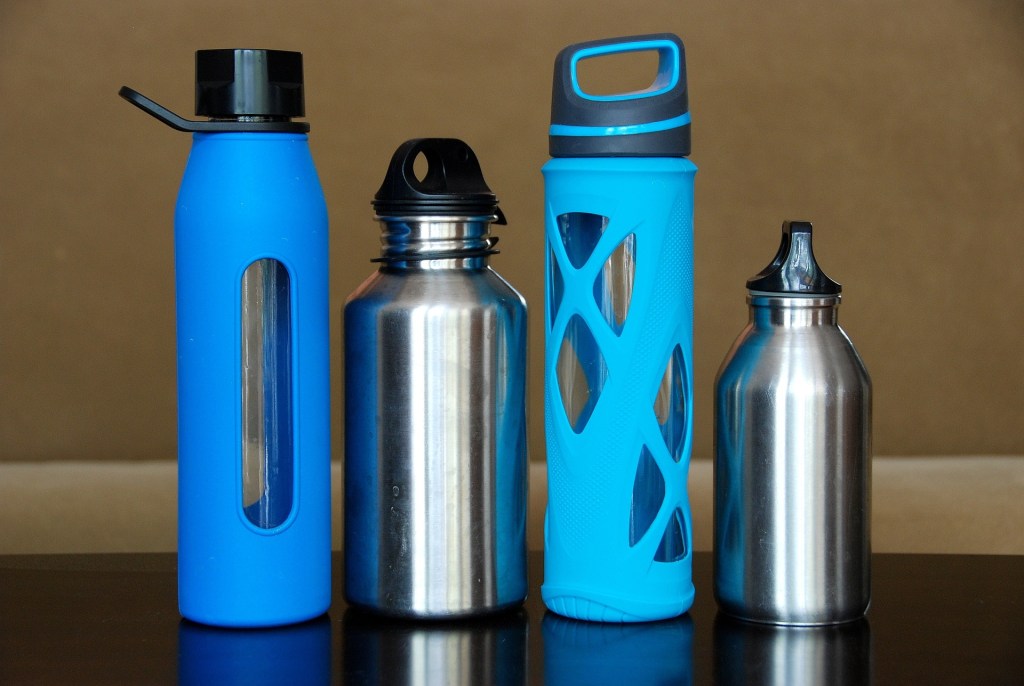
Week 4: Invest in a Reusable Water Bottle
Take advantage of a reusable water bottle. Most of the plastic water bottles we use end up in landfills. This Washington Post article explains that each year, an American sends about 100 water bottles to the landfill. If you’re at home, there’s no need to be drinking from single-use water bottles. So, keep those extra water bottles from entering the landfill altogether. After all, drinking all that water will keep your skin healthy and fresh!
Week 5: Go Tree Free
Reduce and replace the number of paper products in your home. Try cutting out paper towels and using washable towels. Reduce the amount of toilet paper you use and opt for a tubeless brand. We promise that three-four squares of single ply won’t hurt you. Also, single-ply toilet paper degrades more quickly in water making it more eco-friendly than its cushy competitors. Instead of tissues, try a washable handkerchief.
Check out this Yale article on the impact of the logging industry. Your contribution may be small, but it does matter!
Week 6: Switch to LED Lighting
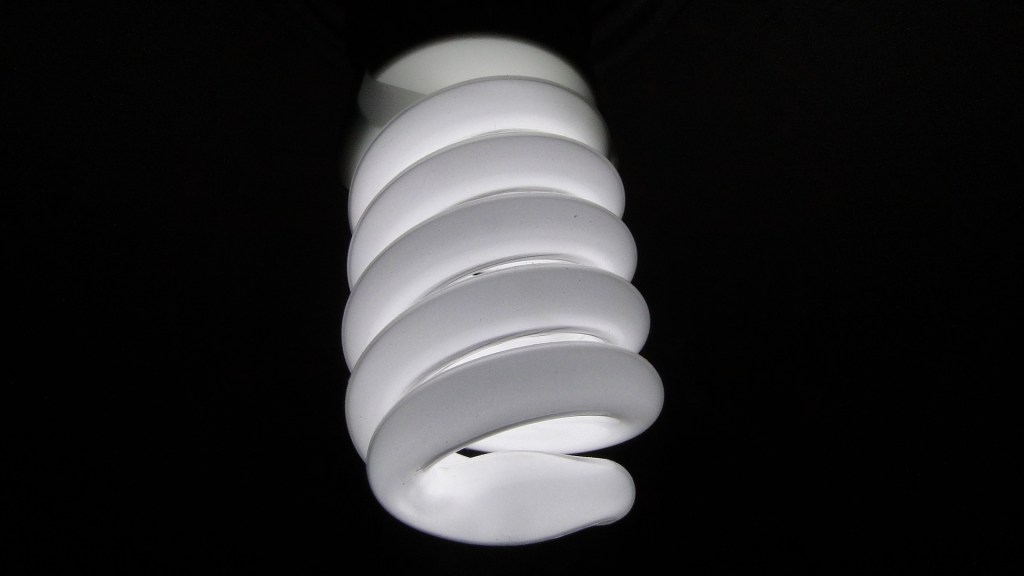
Making the switch to LED bulbs can put money back in your pocket and reduce energy consumption. According to the United States Department of Energy’s article on LED Lighting, making the switch from traditional bulbs saves 75% more energy than traditional incandescent bulbs. LED bulbs also last much longer saving you replacement money in the long run!
Week 7: Adopt Tote Bags
Single-use plastic bags litter our waterways, parks, and other natural habitats. In fact, New York City has banned the distribution of single-use plastic bags due to the obscene amount of plastic waste created annually. Check out this NYT article with more information on the new law passed to ban plastic bags in NYC. To decrease your waste production, ditch plastic bags and carry a tote bag or keep some in your car for shopping trips.
Week 8: Switch to Bamboo Straws and Toothbrushes
To conclude your 8-week transformation, switch out single-use plastic items like toothbrushes and straws for reusable metal, or our favorite, bamboo materials. Pencils, cutlery, and even floorboards can be replaced or created with these materials to reduce waste. Check out this blog post to help you replace plastic items with bamboo!
We wish you the best of luck with your sustainability transformation. Remember, it’s okay to mess up, but try to stay mindful during your endeavors!
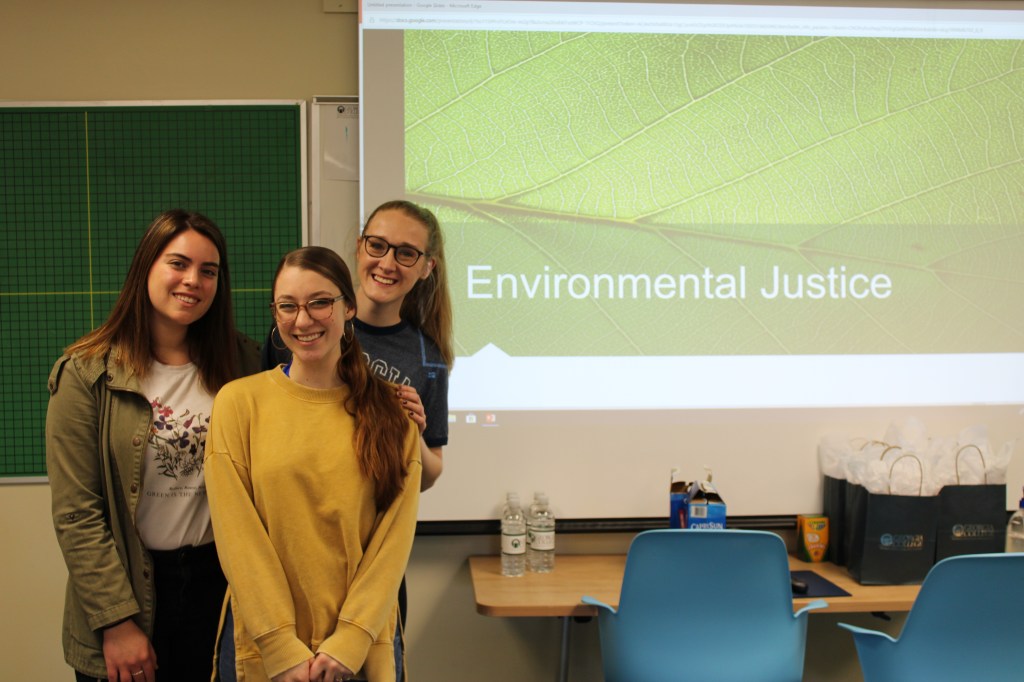
GC Sustainability members presenting to Early College Friday, April 6th.
Anyone who supports the well being of the planet knows we must support the education of the youth in order to foster environmental change. Ultimately, “the youth is our future” and their actions can either positively or negatively impact our planet. To help enlighten young people in the Milledgeville community and encourage them to practice green initiatives, members of the Georgia College (GC) Office of Sustainability partnered with Early College to educate students on issues related to environmental justice.
The students were able to watch two videos. The first video describes the state of our planet and how much destruction we have done during our short time on Earth. According to the video, if the existence of the planet was condensed to a 24 hour period, humans have dwelled on it for approximately 3 seconds.
The second video visually demonstrates privilege through the metaphor of a race to win $100. The Early College students learned that even though some people deal with hardships everyone still must go through the process of life. This video addresses the idea that the effects of privilege on success are real and should not be ignored.
If students come from low-income families or deal with other hardships, it may be more difficult to focus solely on their education. Check out this article published by the U.S. Department of Education that explains more.
Many urban areas also tend to increase the number of trees to decrease air pollution but give less attention to lower-income neighborhoods or industrialized areas in the same city that need better air quality as well. By explaining these principles to students, we were able to rally their support, open their eyes, and inspire them to fight for environmental and social justice.
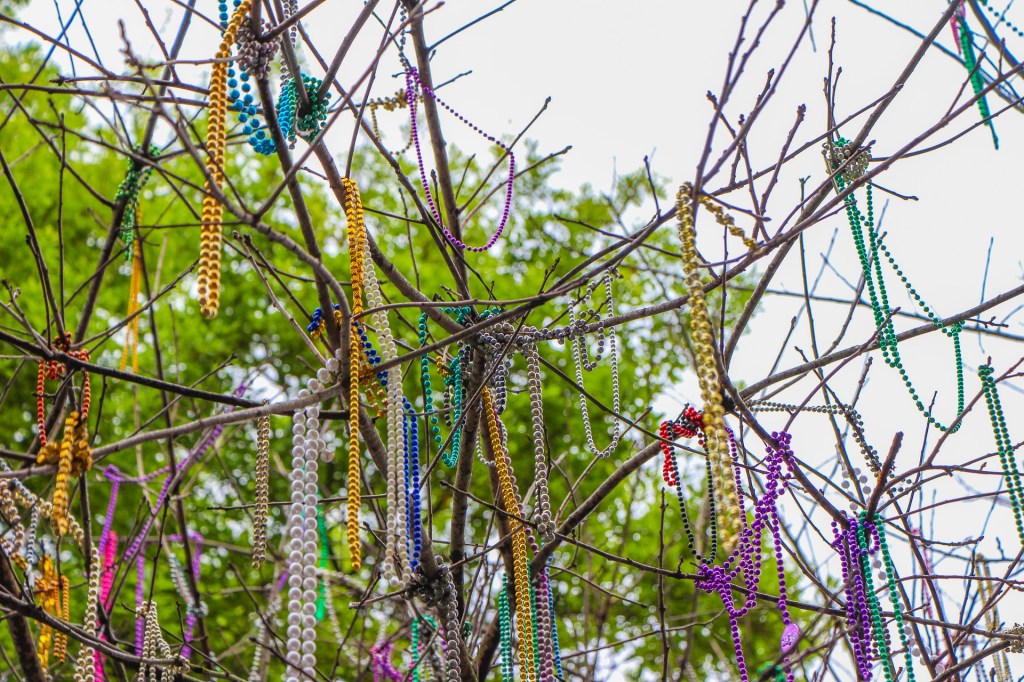
Mardi Gras, Fat Tuesday or Pancake Tuesday. Whatever you call this feasting holiday, you’re probably familiar with the decorations, the large number of beads, and all of the parades and celebrations. These beads, whose bright colors represent justice, faith, and power, are thrown from parade floats to parade attendees, but where are these beads actually ending up after the parties are over?
According to an article published by National Geographic, approximately 46 tons of Mardi Gras beads were found in the streets of New Orleans after 75 rounds of parades cycled through the city. On average, the U.S. orders up to 25 million tons of beads in total to celebrate the event. These beads add to the festive atmosphere but usually end up polluting our neighborhood streets and waterways. Usually, the bead necklaces will make their way to landfills where they take hundreds of years to decompose. The beads are also classified as single-use plastics therefore, they cannot be recycled.
Street sweepers follow parade floats for attendees to toss their beads back so they can be reused at future events. This act of returning and reusing plastic helps reduce the amount of waste shipped off to landfills. Citizens are also encouraged to keep the beads as momentos or to incorporate them into craft projects instead of tossing them in the trash or leaving them in the streets. Check out HGTV’s list of 10 creative solutions on how to reuse your Mardi Gras beads!
To help reduce the amount of plastic waste generated, scientists created biodegradable paper beads as an alternative to the plastic. These beads are environmentally friendly and will allow party-goers to continue their traditions without causing harm to the environment. Mardi Gras wouldn’t be the same without beads, but next year, opt for the paper equivalent!







 Georgia College Green Initiative